
Discount up to 35% for first purchase only this month.

Blog

Tag: AI

Ai vs Human
Technology

AI vs Human Work: Will AI Replace Jobs or Transform Work?

Introduction Artificial intelligence is rapidly changing how people work, learn, and create. From automation tools to advanced AI assistants, technology is now capable of performing tasks that once required human effort. This has created an important question worldwide: AI vs human work — will machines replace humans or simply change the way we work? While AI can process large amounts of data and automate repetitive tasks, human intelligence still plays a crucial role in creativity, emotional understanding, and decision-making. Instead of competition, many experts believe the future lies in collaboration between humans and AI. This article explores the differences between AI and human work, their strengths, limitations, and what the future of jobs may look like. Understanding Artificial Intelligence in the Workplace Artificial intelligence refers to computer systems designed to perform tasks that normally require human intelligence, such as learning, analyzing, and problem-solving. Common workplace uses include: AI tools help organizations increase efficiency by reducing manual work and improving accuracy. External Resource:https://www.mckinsey.com/capabilities/quantumblack/our-insights/the-state-of-ai Internal Guide:https://blogspirea.com/ai-for-productivity Strengths of AI in Modern Work 1. Speed and Efficiency AI systems can analyze massive datasets within seconds, something humans cannot do at the same scale. 2. Automation of Repetitive Tasks AI excels at routine work such as data entry, report generation, and scheduling. 3. Consistency and Accuracy Machines do not experience fatigue, which helps reduce errors in repetitive operations. 4. 24/7 Availability AI tools can operate continuously without breaks, improving productivity in many industries. Businesses adopting AI often report faster workflows and improved operational efficiency. Strengths of Human Work Despite technological advancement, humans possess abilities AI cannot fully replicate. 1. Creativity and Innovation Humans create original ideas, art, and emotional storytelling that require imagination and experience. 2. Emotional Intelligence Understanding emotions, empathy, and social interaction remain uniquely human strengths. 3. Critical Thinking Humans evaluate ethical situations and make complex judgments based on context. 4. Adaptability People can handle unexpected situations and learn from real-world experiences. Human skills remain essential in leadership, education, healthcare, and creative industries. AI vs Human Work: Key Differences Feature Artificial Intelligence Human Workers Speed Extremely fast Moderate Creativity Limited Highly creative Emotional understanding None Strong Accuracy High in structured tasks Varies Adaptability Limited to programming Highly adaptable Decision-making Data-driven Experience + emotion The comparison shows that AI and humans excel in different areas. Jobs Most Affected by AI AI is transforming roles that involve repetitive or predictable tasks. Examples include: Automation allows companies to focus human workers on higher-value responsibilities. Jobs Where Humans Remain Essential Many professions rely heavily on human qualities. Examples: These careers require empathy, ethical judgment, and creativity — areas where AI still struggles. Collaboration: The Real Future of Work Experts increasingly describe the future as AI + Humans, not AI versus humans. AI can: Humans can: Together, this collaboration improves productivity and innovation. Research suggests workers using AI assistance often perform tasks faster and with improved quality compared to working alone. Advantages of AI in the Workplace Challenges and Concerns Job Displacement Some roles may change or disappear due to automation. Skill Gap Workers must learn new digital and AI skills. Ethical Issues AI decisions may raise concerns about fairness and privacy. Organizations must balance innovation with responsible AI usage. Skills Humans Need in the AI Era To stay competitive, workers should focus on skills that complement AI: Learning how to work alongside AI tools is becoming an essential career skill. AI vs Human Productivity AI improves efficiency by reducing repetitive workload, while humans contribute innovation and strategic insight. Studies show AI-assisted workers can complete tasks faster while maintaining higher quality output when human oversight remains involved. The strongest productivity gains happen when AI supports human decision-making rather than replacing it. Future Outlook: Will AI Replace Humans? Most experts agree that AI will not completely replace humans but will transform job roles. New opportunities are emerging, including: Technology historically creates new industries even as it changes old ones. Conclusion The debate around AI vs human work is not about replacement but transformation. Artificial intelligence excels at speed, automation, and data processing, while humans lead in creativity, empathy, and complex reasoning. The future belongs to those who learn to collaborate with AI rather than compete against it. By combining human intelligence with artificial intelligence, society can achieve higher productivity, innovation, and better working environments.

chat gpt
Technology

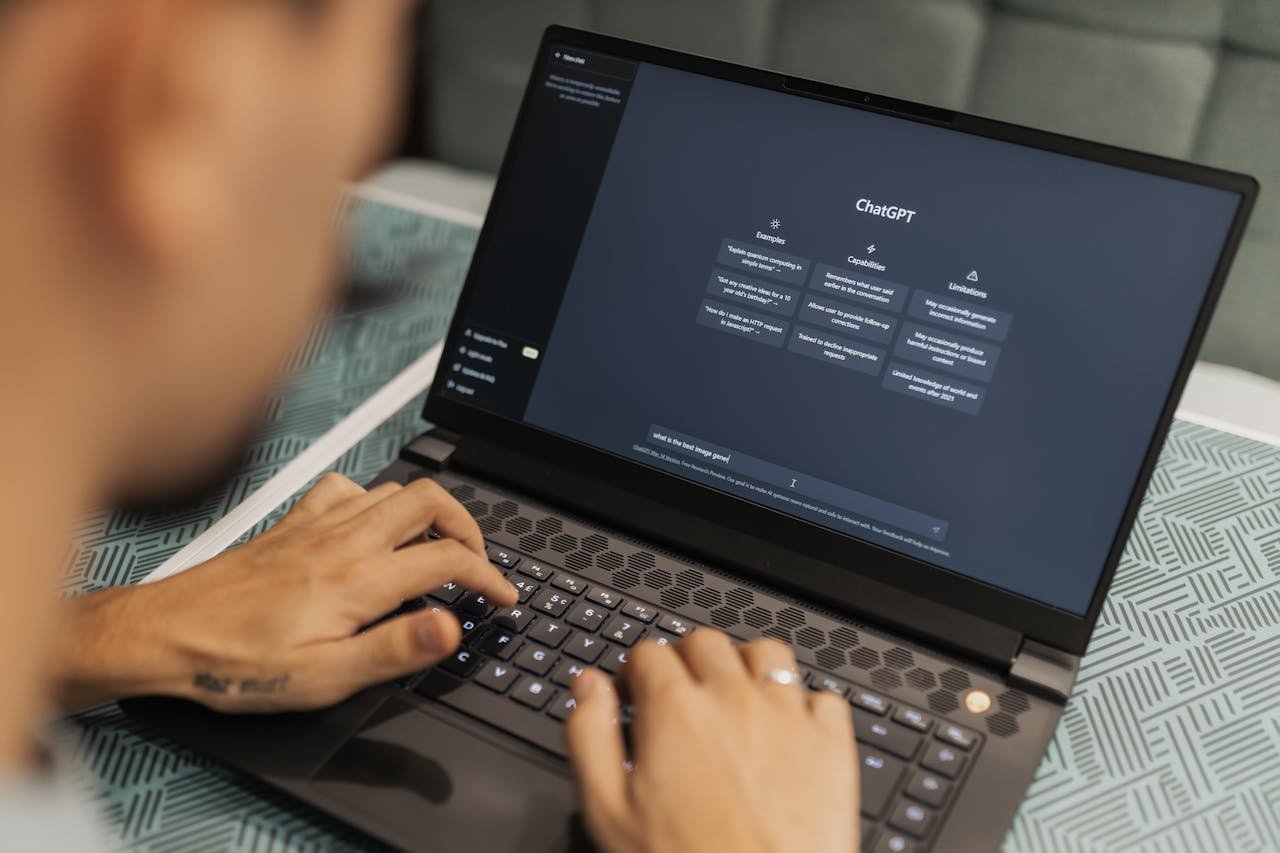
ChatGPT Prompts: Best Examples to Get Better AI Results

Introduction Artificial intelligence tools are becoming an essential part of learning, work, and creativity. However, the quality of results you get from AI depends largely on one thing — the prompt you give. That is why understanding ChatGPT prompts is the key to unlocking the full power of AI. A well-written prompt helps ChatGPT generate accurate answers, detailed explanations, creative ideas, and useful solutions in seconds. Whether you are a student, content creator, or professional, learning how to write effective prompts can dramatically improve productivity. This guide explains what ChatGPT prompts are, how they work, and provides practical examples you can start using immediately. What Are ChatGPT Prompts? A ChatGPT prompt is the instruction or question you give to the AI to generate a response. For example: The clearer your instructions, the better the output. AI models respond based on context and details provided in the prompt, which means better prompts lead to better results. Why Good Prompts Matter Many users believe AI gives random answers, but in reality, results depend on how specific your request is. Benefits of Using Proper Prompts Studies on generative AI show structured instructions significantly improve output quality and efficiency.External resource: https://platform.openai.com/docs/guides/prompt-engineering 👉 Internal Guide:https://blogspirea.com/ai-for-productivity Basic Structure of a Perfect ChatGPT Prompt A strong prompt usually includes three parts: Example Bad Prompt: Write about fitness. Good Prompt: Act as a fitness coach and write a beginner-friendly 500-word guide on home workouts using simple language. The second prompt gives clearer direction and produces better results. Best ChatGPT Prompts for Students Students can use prompts to improve learning efficiency. Study Prompts AI tools help simplify complex subjects and support faster learning. ChatGPT Prompts for Writing and Content Creation Content creators can use prompts to generate ideas and improve writing quality. Writing Prompts These prompts help reduce writer’s block and speed up content creation. ChatGPT Prompts for Productivity AI can also act as a daily productivity assistant. Productivity Prompts Research shows AI assistance helps users organize tasks and reduce mental overload. ChatGPT Prompts for Career and Professional Work Professionals increasingly use AI for workplace tasks. Professional Prompts AI productivity tools are helping professionals complete communication tasks faster and more efficiently. Advanced Prompt Techniques 1. Give Context Provide background information for accurate results. Example: I am a beginner blogger. Suggest SEO strategies for my new website. 2. Specify Output Format Tell AI how you want results delivered. Example: Provide the answer in a table format. 3. Ask for Step-by-Step Instructions Example: Explain the process step by step with examples. 4. Request Multiple Options Example: Give me 10 headline ideas. This increases creativity and choice. Common Mistakes When Writing Prompts Clear communication always produces better results. Tips to Write Better ChatGPT Prompts Prompt improvement is a skill that gets better with practice. Future of Prompting and AI Interaction Prompt writing is becoming an important digital skill. As AI tools evolve, users who understand how to communicate effectively with AI will gain significant advantages in learning and productivity. Experts believe prompt engineering will become a common workplace skill across industries in the coming years. Conclusion ChatGPT prompts are the foundation of effective AI usage. By learning how to structure clear and detailed prompts, you can transform AI into a powerful assistant for studying, working, and creating content. Start experimenting with different prompts, refine your instructions, and discover how much more productive AI can make your daily tasks.

Ai Tool
Technology

AI for Productivity: How Artificial Intelligence Boosts Efficiency

Introduction Artificial intelligence is no longer a futuristic concept — it has become a powerful productivity partner in everyday life. From writing emails and managing schedules to analyzing data and automating repetitive tasks, AI for productivity is helping students, professionals, and businesses work faster and smarter. Recent workplace studies show that organizations adopting AI tools are seeing measurable improvements in efficiency, quality, and workflow management. Around 38% of employees report AI integration in their workplace to improve productivity and performance. In this guide, you will learn how AI improves productivity, the best tools available today, and practical ways to use AI effectively without replacing human creativity. What Is AI Productivity? AI productivity refers to using artificial intelligence tools to complete tasks more efficiently by automating repetitive work, assisting decision-making, and improving accuracy. Instead of replacing human effort, AI acts as a digital assistant that helps people focus on meaningful and creative work. AI systems can: Research shows AI assistance can increase worker productivity by about 15% in task performance environments. Why AI Is Becoming Essential for Productivity Modern work involves constant communication, research, and multitasking. AI tools reduce workload pressure by handling time-consuming tasks. Key Benefits of AI Productivity Tools Workers using generative AI report saving an average 5.4% of weekly working hours, equivalent to more than two hours per week. 👉 Internal Resource:https://blogspirea.com/best-ai-tools-for-students How AI Improves Productivity in Real Life 1. Automating Repetitive Tasks AI can handle routine work such as formatting documents, answering emails, and organizing files. Automation allows users to spend more time on creative thinking. AI tools also minimize human error and improve output quality by reducing manual data entry. 2. Faster Research and Information Processing Instead of searching multiple websites, AI assistants summarize information instantly and provide structured insights. This dramatically reduces research time for students and professionals. 3. Smarter Writing and Communication AI writing assistants help create: Studies show knowledge workers using AI experience performance improvements between 10% and 25% in writing and analytical tasks. 4. Better Time Management AI scheduling tools automatically: This reduces mental overload and improves daily organization. Best AI Tools for Productivity in 2026 ChatGPT Ideal for brainstorming, writing assistance, explanations, and workflow automation. Notion AI Helps organize notes, projects, and productivity systems in one workspace. Grammarly Improves grammar, clarity, and professional communication. Canva AI Creates presentations, visuals, and designs quickly. Zapier AI Automation Connects apps and automates workflows between tools. AI productivity platforms help teams work faster by streamlining workflows and optimizing task management. External Resource:https://zapier.com/blog/best-ai-productivity-tools/ AI Productivity in the Workplace Businesses worldwide are investing heavily in AI because of measurable efficiency gains. Economic forecasts suggest AI could boost global productivity by up to 15% over the next decade. Companies are increasingly relying on AI to enable smaller teams to achieve higher output levels. AI Productivity for Students and Creators AI is not limited to corporate environments. Students and creators benefit equally. AI helps with: Instead of spending hours organizing information, users can focus on understanding and creativity. Common Mistakes When Using AI for Productivity Over-reliance on AI AI should assist thinking, not replace it. Not Verifying Information Always cross-check important facts. Using Too Many Tools Choose 2–3 tools that fit your workflow instead of using everything. Ignoring Skill Development AI works best when combined with human expertise. Challenges and Limitations of AI Productivity While AI improves efficiency, it also has limitations. Experts note that productivity gains depend on how well organizations integrate AI into workflows rather than simply adopting tools. Future of AI Productivity AI adoption continues to grow rapidly across industries. Employees with strong AI skills experience significantly faster productivity growth compared to non-AI users. Future developments may include: AI is expected to reshape how people work, learn, and manage daily tasks. Tips to Use AI Productively Every Day Small improvements in workflow can create massive productivity gains over time. Conclusion AI for productivity is changing how work gets done. By automating routine tasks, improving accuracy, and accelerating learning, artificial intelligence helps individuals achieve more in less time. The goal is not to work harder but to work smarter. When used responsibly, AI becomes a powerful assistant that enhances creativity, efficiency, and overall performance. Start small, experiment with tools, and gradually build an AI-powered productivity system that fits your lifestyle.

AI Tool
Technology

Best AI Tools for Students in 2026 (Free & Powerful Guide)

Introduction Technology is transforming education faster than ever, and artificial intelligence is now becoming an essential study companion for students worldwide. From writing assignments to organizing notes and understanding complex subjects, the best AI tools for students help save time and improve learning efficiency. Instead of replacing learning, AI tools help students focus on understanding concepts while automating repetitive tasks like proofreading, summarizing lectures, and research organization. Studies show that AI-powered academic tools improve productivity by assisting with idea generation, time management, and personalized learning experiences. In this guide, you will discover the most useful AI tools every student should use to study smarter in 2026. Why Students Are Using AI Tools Today AI tools are becoming popular because they simplify academic work and reduce workload pressure. Benefits of AI Tools for Students Modern AI platforms help students organize information and manage studies more efficiently instead of spending hours on repetitive tasks. 1. ChatGPT – The Ultimate Study Assistant ChatGPT is one of the most widely used AI tools among students. It helps explain difficult topics in simple language, generate study notes, and assist with assignments. Best Uses AI chatbots help students outline essays and understand subjects more clearly when used responsibly. 2. Google Gemini – Powerful AI for Research and Writing Google Gemini has become a strong alternative AI assistant with deep integration into Google Docs, Slides, and Sheets. Why Students Love It Recent reports show Gemini offers advanced capabilities comparable to premium AI tools while remaining accessible to students. 3. Grammarly – AI Writing and Grammar Assistant Grammarly is essential for students who want clear and professional writing. Key Features Grammarly uses AI algorithms to improve writing quality across documents and online platforms. External Resource:https://www.grammarly.com 4. Notion AI – Smart Notes and Study Organization Notion AI helps students manage notes, projects, and deadlines in one workspace. What It Helps With AI-powered note tools allow students to convert lectures into structured notes quickly. 5. Perplexity AI – Research Made Simple Perplexity AI is designed for accurate research and provides answers with sources. Benefits Students prefer it because it provides citations instead of random search results. 6. Canva AI – Presentation and Design Helper Students frequently need presentations and visual projects. Canva AI simplifies design work. Use Cases AI design tools help students create professional visuals without design skills. 7. Otter.ai – Automatic Lecture Notes Otter.ai records and converts lectures into searchable notes. Features AI transcription tools help students review lectures efficiently. How AI Tools Improve Learning AI tools act as learning assistants rather than replacements for study effort. They help students: Research shows AI-assisted learning improves motivation and writing skills when used responsibly. Tips for Using AI Tools Responsibly AI should support learning — not replace it. Best Practices Experts recommend using AI to handle repetitive tasks while keeping real learning active. Future of AI in Education AI adoption among students is rapidly increasing. Surveys show a majority of students already use AI tools for studying, research, and homework preparation. Educational platforms are now integrating AI tutors, personalized study paths, and smart assessments, making learning more interactive than ever. Conclusion The best AI tools for students are changing how learning happens. From writing assistance to research and productivity management, AI allows students to focus more on understanding and creativity rather than repetitive work. When used wisely, AI becomes a powerful academic partner that improves efficiency, confidence, and study performance. Start with one or two tools, build a smart workflow, and make AI work for your learning journey.

Home Workout
Health

Home Workout Plans: Beginner to Advanced Fitness Guide

Introduction Staying fit no longer requires expensive gym memberships or complicated equipment. Today, home workout plans have become one of the most effective ways to improve health, build strength, and maintain an active lifestyle from the comfort of your home. With a well-structured routine, you can burn calories, improve endurance, and boost mental wellness without stepping outside. Whether you are a beginner or restarting your fitness journey, home workouts provide a flexible and sustainable solution. Why Home Workout Plans Are So Popular Modern lifestyles make it difficult to visit gyms regularly. Home workouts remove travel time while still delivering excellent results. Benefits of Home Workouts Regular physical activity improves heart health, helps manage weight, and reduces stress levels. Read more: https://blogspirea.com/healthy-daily-habits-guide How Much Exercise Do You Need? Health experts recommend: This means a simple 20–30 minute daily workout at home is enough to maintain good fitness. Key Elements of an Effective Home Workout Plan Cardio Training Cardio exercises improve endurance and help burn calories. Examples: Strength Training Strength exercises build muscle and increase metabolism. Examples: Bodyweight workouts are highly effective even without equipment. Flexibility and Mobility Stretching improves posture and prevents injuries. Examples: Beginner Home Workout Plan (No Equipment) 20-Minute Routine Perform 3 rounds: Rest for 60 seconds between rounds. Focus on correct form rather than speed. Intermediate Home Workout Routine 30-Minute Workout Repeat for 4 rounds. Advanced Home Workout Plan HIIT Full Body Workout 40 seconds work and 20 seconds rest: Repeat 4–5 rounds. Weekly Home Workout Schedule Monday – Full Body StrengthTuesday – Cardio TrainingWednesday – Stretch and RecoveryThursday – Lower Body WorkoutFriday – Upper Body WorkoutSaturday – HIIT SessionSunday – Rest Day Consistency matters more than intensity. Optional Equipment for Home Workouts You can enhance workouts using: External resource:https://www.mayoclinic.org/healthy-lifestyle/fitness Common Mistakes to Avoid Avoiding these mistakes helps prevent injuries and improves results. Nutrition Tips for Better Results Combine workouts with balanced nutrition. Focus on: Healthy eating supports muscle recovery and energy levels. Mental Health Benefits of Home Workouts Regular exercise helps: Physical activity releases hormones that naturally improve mental well-being. How to Stay Consistent With Home Workouts Small daily habits create long-term fitness success. Home Workout vs Gym Workout Home Workout: Gym Workout: Both are effective, but home workouts are ideal for beginners. Conclusion Home workout plans show that fitness is achievable anywhere. With consistency, proper routines, and healthy habits, you can build strength, improve endurance, and maintain overall wellness without a gym. Start small, stay consistent, and focus on progress instead of perfection.

Popup widget

Big Offer

Click on the Edit Content button to edit/add the content.